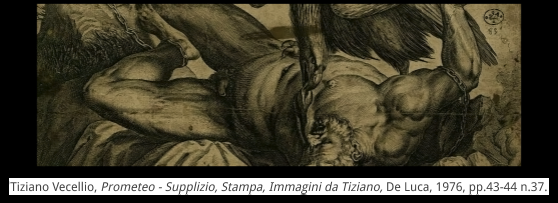

Born under the sign of anticipation, of which Prometheus, “he who thinks ahead,” is the emblem, technique once promised foresight. Yet in the age of technological acceleration it risks stripping from us the very capacity to foresee, and with it the responsibility that foresight confers. Against that drift, this research proposes another use of the newest instruments: not as mere optimizers of process, but as expressive media.
Virtual Unreality is the name given here to a techne that places three forces in conversation: virtual reality; its application in inventive fields such as architecture and interior design; and participatory design. From their union comes TaoVR, software conceived, written, and tested for this study. This extension of Unreal Engine 4 lets designers and communities step inside a project before it exists in matter.
The problem it answers is deceptively ordinary and stubbornly persistent. Between the designer and the end user, the perception of space is continually misunderstood. Plans, renders, and drawings still leave a gap where imagination must leap, and where that leap fails, costly corrections follow. TaoVR closes the gap by immersion: a predictive vision of the future in which complex ideas can be communicated, revised, and shared at a level of presence no traditional image can equal.
The method grew from concrete constraints, including lightness, portability, and entry-level headsets, and from months of technical work inside game-engine logics. First came an oneiric proving ground, the Interactive Digital Museum; then field applications with Labsus and Fondazione Cariplo’s Luoghicomuni in Milan; and, in Bergamo, the co-design of UPT Pod (Upper Town Podcast), a youth webradio whose rooms and furnishings were anticipated together with members, associations, neighborhood actors, and the municipal Department of Participation, inside a virtual reconstruction that could be rearranged at will.
What remains is less a product brochure than a stance. In a culture that often reduces technology to efficiency, this work insists that digital tools, especially those born in the game world, may recover their original dignity as means: rigid in their rules, inexhaustible in their applications, and capable, when joined to the alchemy of artistic knowledge, of forging new languages. The digital artist, like the Renaissance figure who held art and mathematics in one hand, becomes again a kind of universal worker, free not by rejecting technique, but by mastering a virtual world unbound by matter, and returning that freedom to the people who will inhabit the spaces yet to be built.